Poultry Tenderness Enzyme Trial Design | FibreYield
Structured enzyme trial design for poultry R&D teams testing tenderness, yield, protein functionality, and batch repeatability in further-processing plants.
Request pricing Structured enzyme trial design for poultry R&D teams testing tenderness, yield, protein functionality, and batch repeatability in further-processing plants.
Request pricingFibreYield supports poultry further-processing plants that need a disciplined way to evaluate enzyme-assisted tenderizing before committing to production scale. If you are comparing chicken breast, strips, fillets, injected products, marinated items, or formed poultry systems, we help structure trials around the plant outcomes that matter: tenderness targets, bite profile, yield retention, protein functionality, label fit, and repeatable batch performance.
As an enzyme supplier for poultry meat tenderizing, FibreYield works with R&D, QA, process engineering, and procurement teams that need more than a sample. You need a practical trial path that can survive real brine systems, dwell time variation, tumbler loading, thermal steps, and high-throughput scheduling.
Tenderizing enzymes can create value when they are matched to the meat system and controlled through the process. The goal is not simply to make poultry softer. The goal is to hit a defined eating profile without losing slice integrity, bite structure, or finished-product consistency.
FibreYield helps your team define the trial around questions such as:
A good R&D trial should produce decisions, not just observations. FibreYield can help you set up a controlled comparison that reflects how your plant actually runs.
We start with the product format, target texture, current pain points, and process route. This includes raw material variability, marinade pickup behavior, hold conditions, forming requirements, cook profile, chilling, and final packaging format.
FibreYield helps narrow the enzyme options for the application. The treatment path may prioritize faster tenderizing response, better texture uniformity, or a more restrained effect where structure and sliceability must be protected.
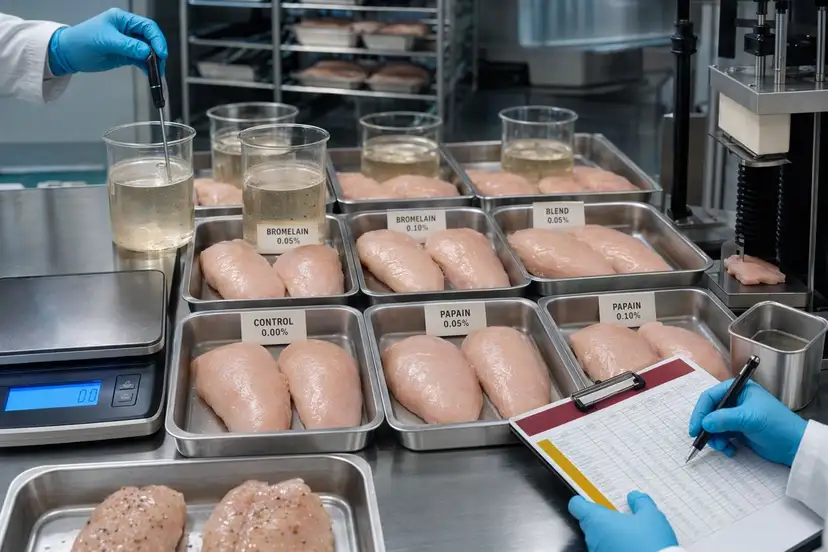
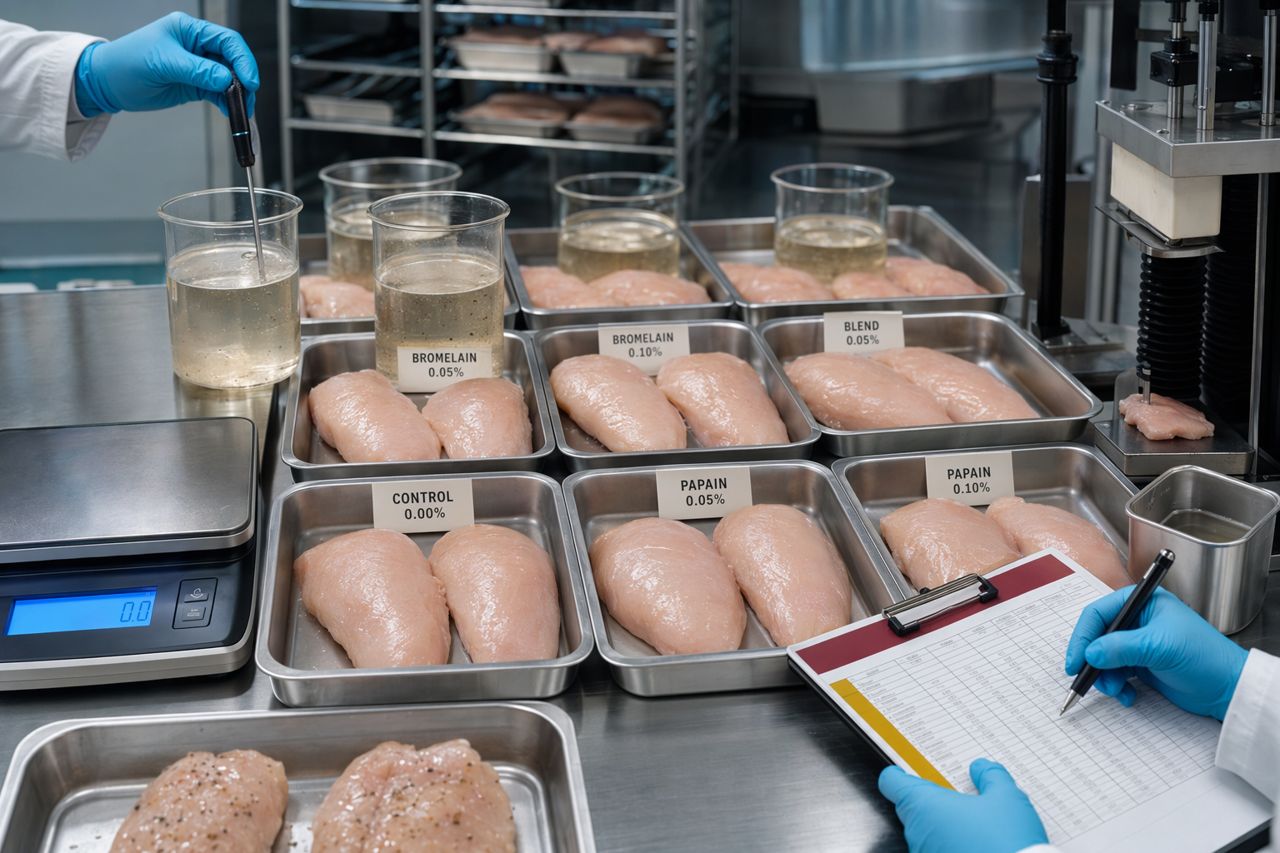
Your R&D team can compare an untreated control against one or more enzyme-assisted approaches using the same meat block, formulation, and process assumptions wherever possible. The objective is to isolate tenderness impact while watching for yield, purge, cook loss, and handling changes.
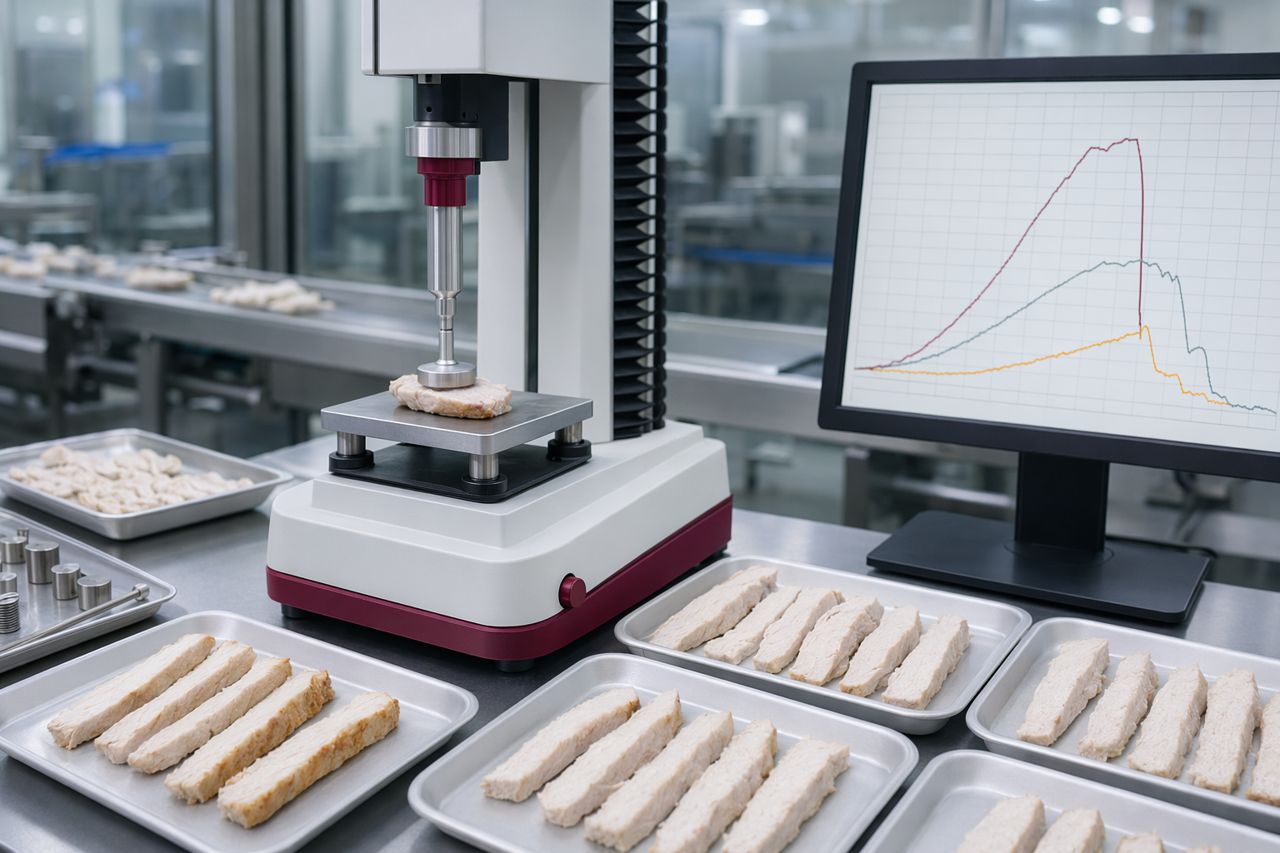
Tenderness should be assessed with bite quality, cut surface, binding, juiciness, purge, cook stability, and finished product appearance. FibreYield encourages a practical evaluation matrix that combines instrumental texture data, trained sensory review, and plant handling observations.
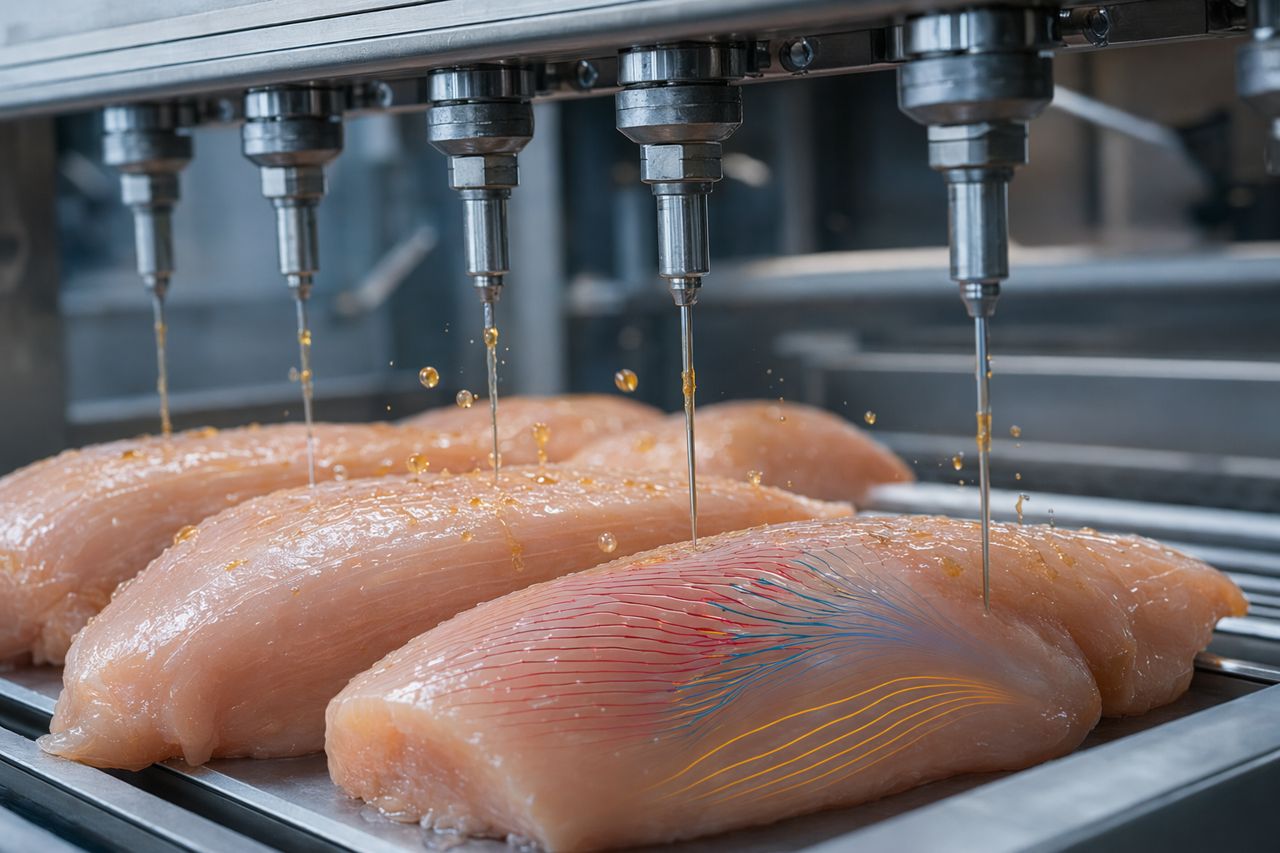
Promising bench or pilot results must be translated into a plant-ready process. We support validation planning for ingredient order of addition, hydration, mixing, injection, tumbling, hold management, cook conditions, and batch-to-batch control.
Poultry processors usually investigate enzyme-assisted tenderizing when they need to reduce variability or improve eating quality without redesigning the entire product.
Common project drivers include:
FibreYield trial support is built for teams that need to defend decisions internally. We help translate enzyme performance into the language used inside poultry plants: process fit, product quality, validation risk, and commercial repeatability.
Your team receives support on:
Tenderizing enzymes must be reviewed in the context of your market, finished-product declaration, customer requirements, and processing claims. FibreYield does not treat enzymes as isolated additives. We help your R&D team consider how the tenderizing system fits with marinades, flavor systems, clean-label objectives, allergen policies, and customer specifications.
For many plants, the best enzyme path is the one that delivers measurable texture improvement while staying compatible with existing formulation expectations and operational controls.
To recommend a suitable trial direction, we typically ask for:
You do not need a finalized protocol before contacting us. If your team has a product target and a process route, we can help shape the next practical trial step.
If you are evaluating an enzyme supplier for poultry meat tenderizing, FibreYield can help you move from screening to structured validation. Share your product format, process route, and target texture outcome, and our application team will recommend a trial path aligned with your plant conditions.
Tell us your application and volume — we reply with pricing and lead time.