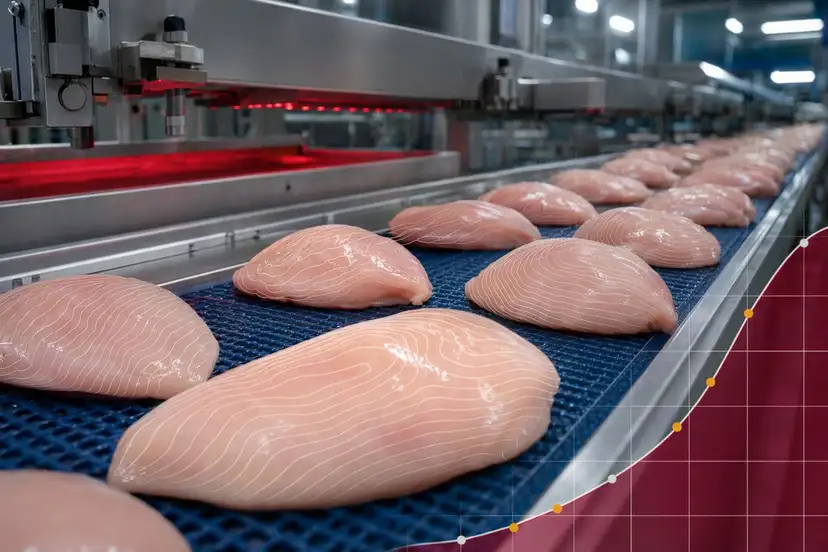
Papain, Bromelain & Protease for Chicken | FibreYield
Compare papain, bromelain, and protease options for poultry tenderness programs. FibreYield supports chicken processing trials, validation, and scale-up.
Request pricing Compare papain, bromelain, and protease options for poultry tenderness programs. FibreYield supports chicken processing trials, validation, and scale-up.
Request pricingWhen a poultry further-processing plant evaluates tenderizing enzymes, the question is rarely “which enzyme is strongest?” The better question is: which enzyme system gives the tenderness curve, bite profile, process fit, and label position your product needs at production scale?
FibreYield works with R&D, application, QA, and process teams comparing papain, bromelain, and food-grade protease systems for injected, marinated, tumbled, and cooked chicken products. As an enzyme supplier for poultry meat tenderizing, we focus on controlled functionality: tenderness improvement without mushy texture, purge issues, bite inconsistency, or scale-up surprises.
Papain, bromelain, and protease blends can all support poultry tenderness programs, but they behave differently in plant conditions. The right choice depends on your muscle type, marinade system, contact time, thermal process, target texture, and finished-product format.
Papain is often selected when a processor needs a clear tenderizing effect and a practical path for injected or tumbled poultry items. It can help reduce chewiness in chicken breast, portioned fillets, boneless products, and value-added formats where repeatable bite is a priority.
Where papain can fit:
Key processing considerations:
Papain can be effective, but it needs a defined process window. FibreYield helps teams build a practical dosing ladder, hold-time map, and finished-texture review before moving from bench work into plant trials.
Bromelain is another common option for poultry tenderizing programs. It can be useful when the product concept calls for noticeable tenderness improvement, particularly in marinated and further-processed formats.
Where bromelain can fit:
Key processing considerations:
For many plants, bromelain is not simply a plug-in ingredient. It should be validated as part of the full process: injection or tumble, hold, cook, chill, packaging, and shelf-life review.
“Protease” is a broad category. In poultry applications, food-grade protease systems may be selected for more tailored performance, improved process tolerance, or a specific texture profile. Some programs use a single enzyme type; others require a formulated approach for better consistency across raw material variation.
Where protease systems can fit:
Key processing considerations:
FibreYield can support protease selection when the target is not maximum tenderization, but managed protein modification that fits your product standard.
A useful enzyme comparison should be built around finished-product outcomes, not only ingredient identity.
Define the desired bite before screening. Are you reducing firmness in whole-muscle breast? Improving chew in strips? Softening a product for a specific customer standard? The enzyme choice should follow the target texture curve.
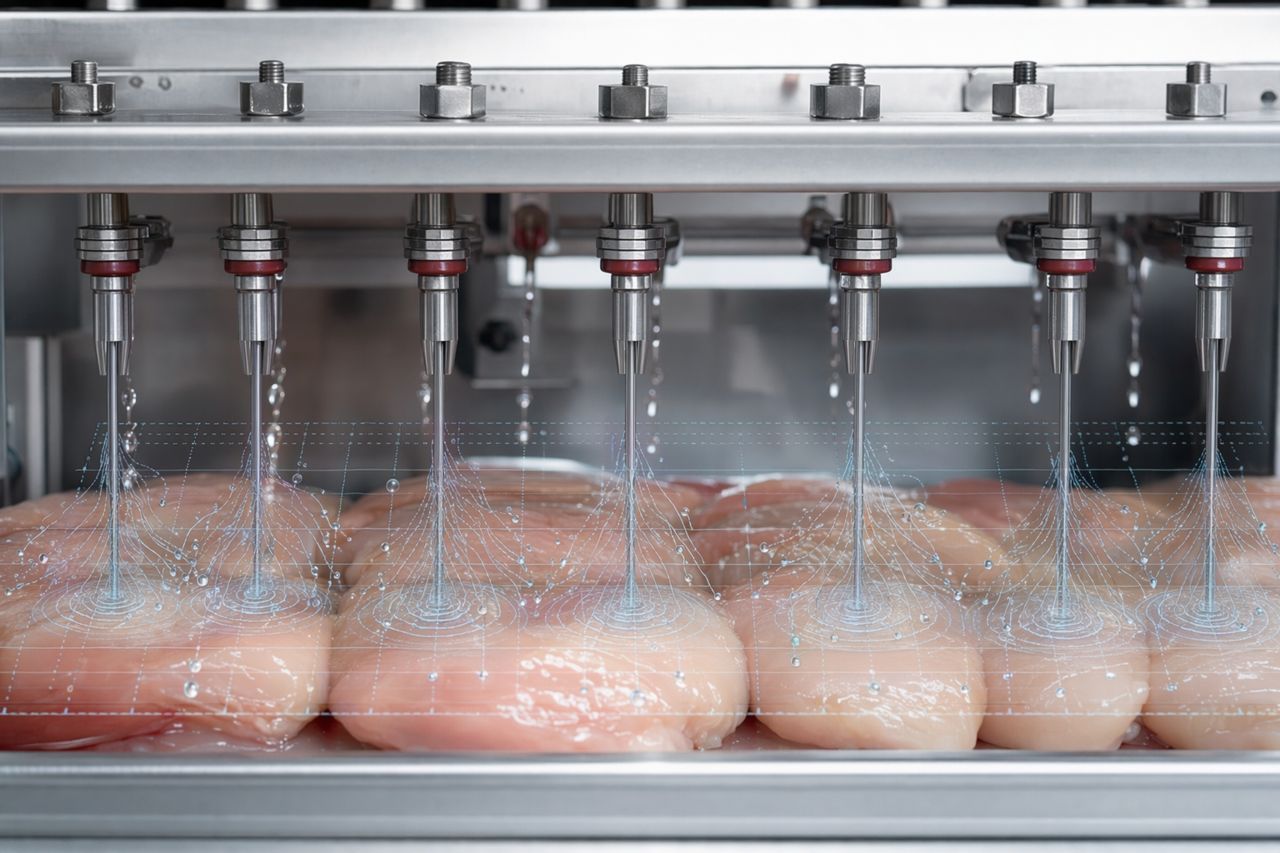
Injection, vacuum tumbling, static marination, and mixed comminuted systems each create different enzyme contact patterns. Poor distribution can cause spot tenderness, edge softening, or batch-to-batch inconsistency.
Your actual plant timing matters: brine make-up, injection, tumble cycle, holding, transfer, cooking, chilling, and packing. Enzyme selection should be validated against the real process window.
Salt, pH, phosphate systems, flavor components, sweeteners, starches, gums, and clean-label requirements can all influence the practical choice. FibreYield helps review the formulation environment before recommending a trial path.
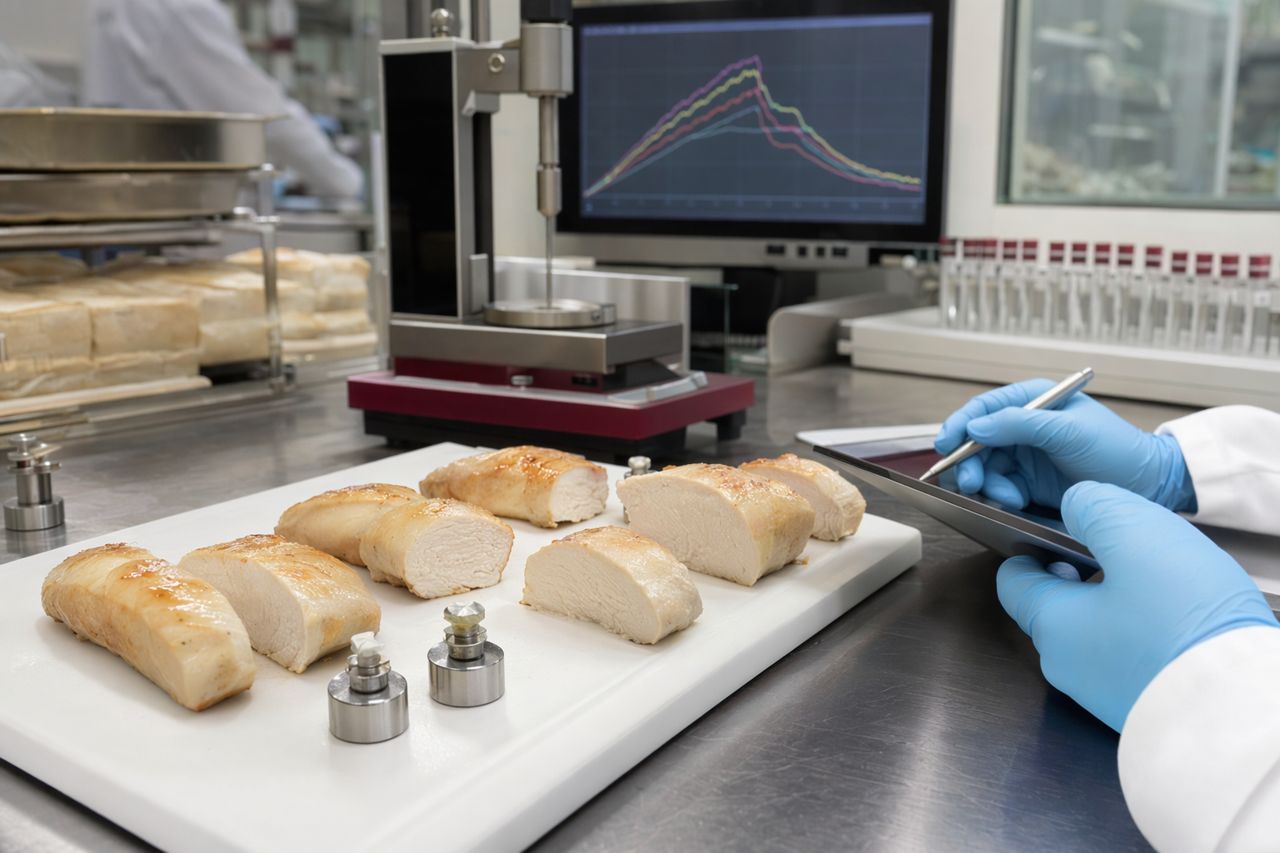
Tenderness is only one variable. Trials should also monitor:
FibreYield supports poultry processors with a structured trial model designed for plant teams.
This approach helps reduce trial noise and gives R&D, QA, and operations a shared basis for decision-making.
FibreYield is built for technical buyers in industrial food production. We help teams evaluate enzyme systems through the lens of process reality: throughput, batch control, formulation compatibility, sensory targets, and validation documentation.
You get support for:
If you are comparing papain, bromelain, or protease options for a poultry further-processing line, FibreYield can help define the right trial path.
Request a quote using the on-site contact form and include your product type, process method, target texture, and current tenderness challenge. We will respond with a practical recommendation for the next step.
Tell us your application and volume — we reply with pricing and lead time.