Troubleshooting Over-Tenderized Chicken | FibreYield
Plant-aware guidance for fixing mushy bite, weak fibers, and process drift when using enzyme tenderizing systems in poultry further-processing.
Request pricing Plant-aware guidance for fixing mushy bite, weak fibers, and process drift when using enzyme tenderizing systems in poultry further-processing.
Request pricingOver-tenderized chicken is rarely caused by one variable. In a poultry further-processing plant, mushy bite, weak muscle fibers, and texture drift usually come from a stack of small shifts: raw material variation, marinade uptake, dwell time, temperature, tumble intensity, and enzyme exposure all moving at once.
For R&D and process teams, the goal is not simply to reduce tenderness. The goal is to recover a defined bite target while keeping yield, slice integrity, label position, and line throughput under control.
FibreYield supports plants looking for an enzyme supplier for poultry meat tenderizing with application guidance, validation trials, and scale-up support built around real production constraints.
Common signs include:
The key point: yield can look acceptable while eating texture is already outside target. That is why tenderness validation needs both plant measurements and sensory confirmation.
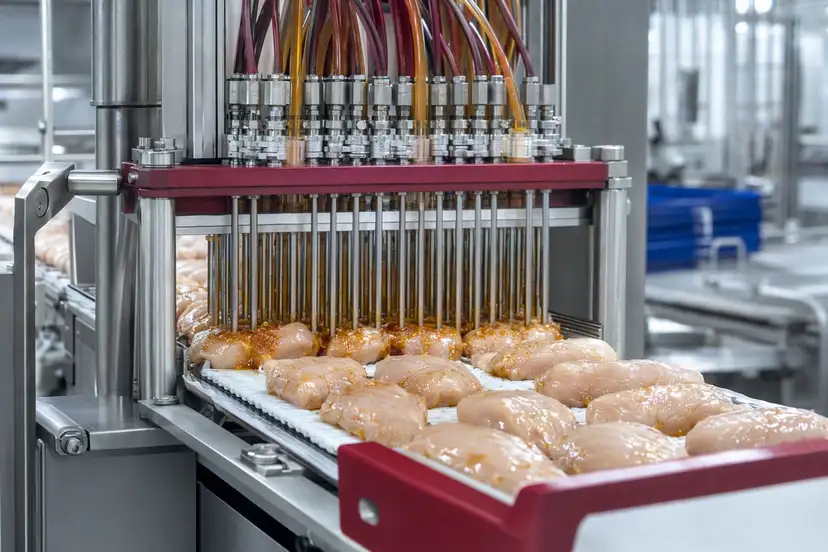
Enzymes do not only act during injection or tumbling. They respond to the full exposure window: when they contact the meat, how evenly they distribute, how long the protein matrix remains in a favorable condition, and when the process effectively stops their action.
Review these points first:
If the tenderizing enzyme is added too early in the brine preparation or sits in a warm premix, performance can become less predictable. A tighter addition point can improve repeatability without changing the formulation.
Extended holding between injection, tumbling, stuffing, forming, breading, or cooking can create unexpected tenderizing. Even short schedule changes can matter when the plant is running high throughput.
Warmer raw material, warm marinade, or slower movement into the next process step can increase texture impact. Map the actual temperature profile, not just the target setpoints.
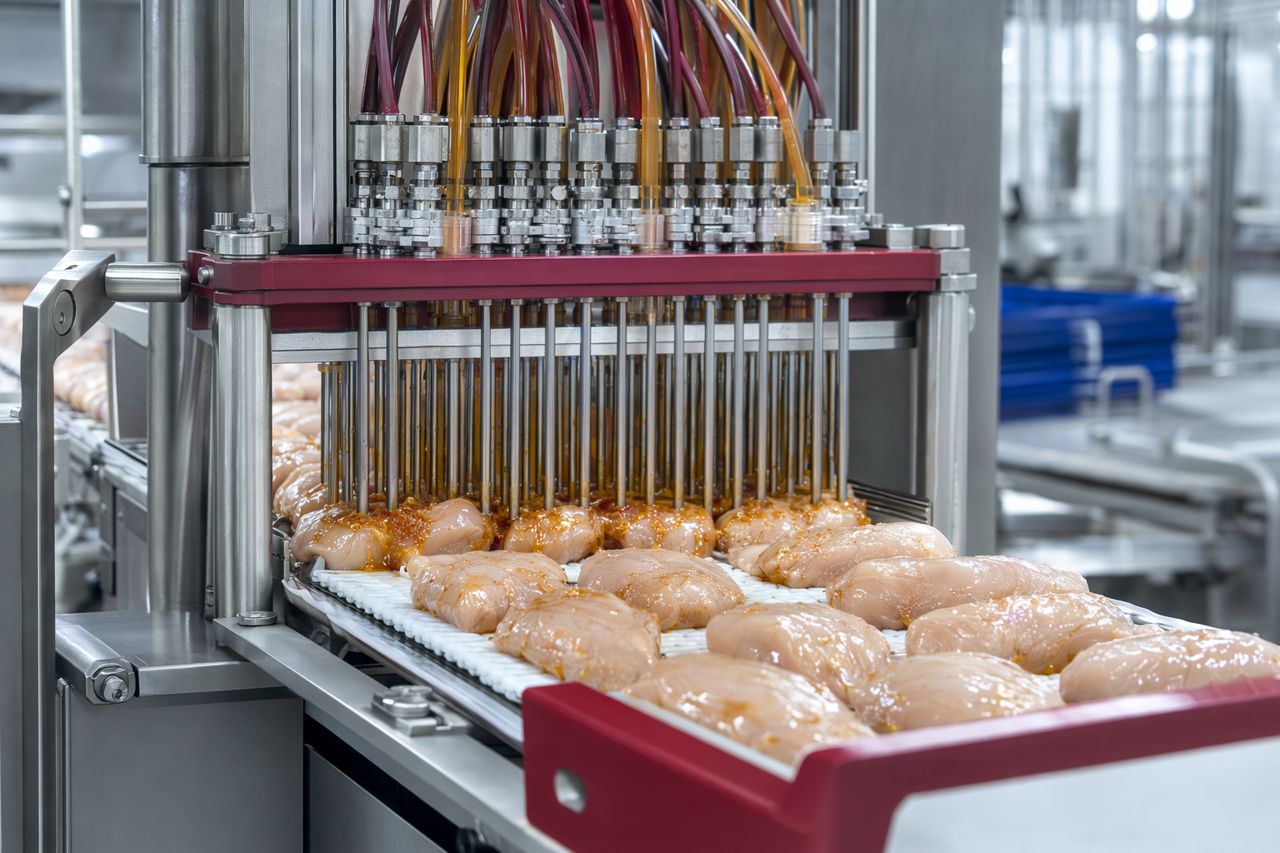
Uneven injection or tumble distribution can create mixed texture: firm areas beside fragile, overly soft zones. This is often misread as a dosage issue when the real driver is delivery.
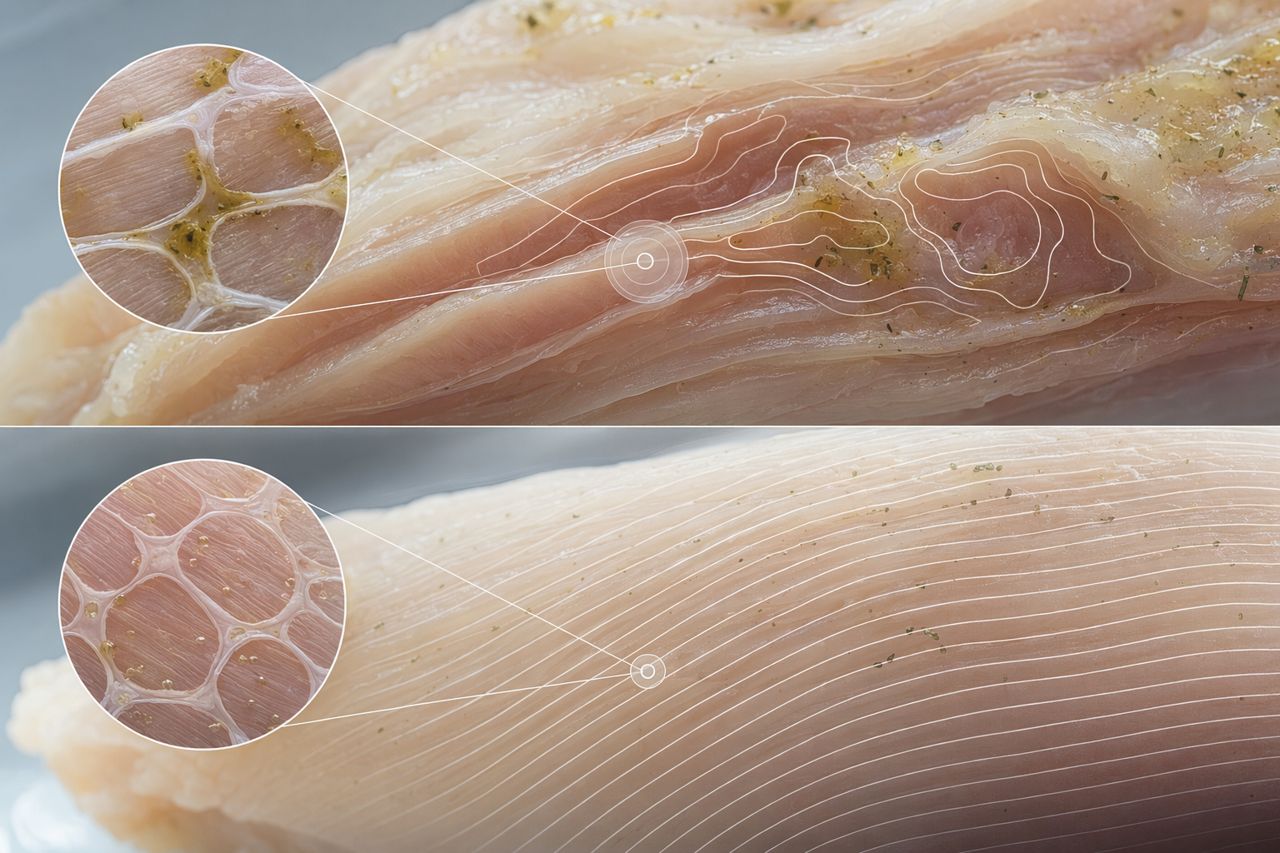
Mushy chicken can come from protein breakdown, but it can also come from mechanical stress.
Check for:
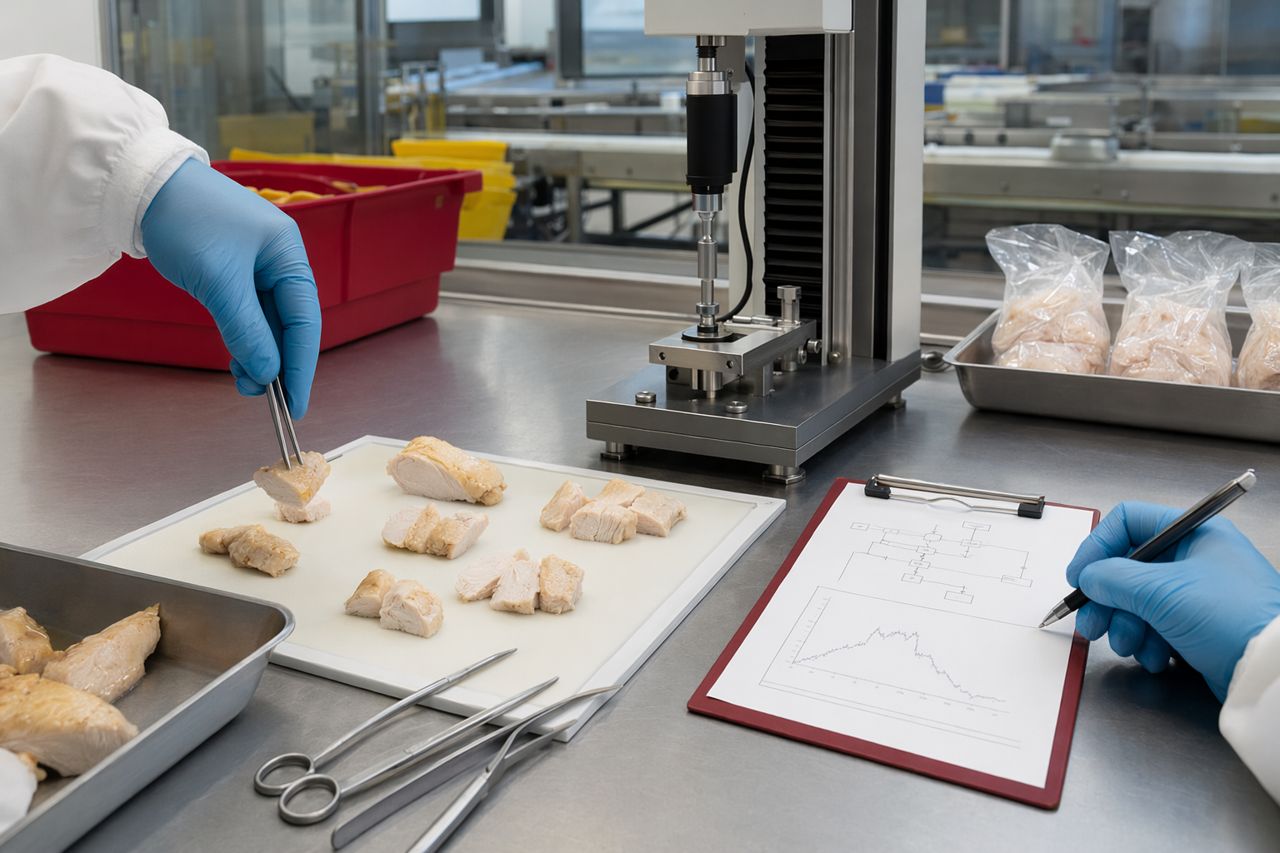
A useful diagnostic step is to run matched plant trials: one with the enzyme system removed, one at the current addition rate, and one with adjusted exposure. Keep the mechanical process constant so the texture source becomes clearer.
Tenderizing enzymes interact with a full marinade system. Salt, phosphates or phosphate alternatives, starches, fibers, gums, acids, flavors, and clean-label ingredients can all change protein hydration and bite perception.
If the product becomes soft but also loses water, the issue may involve both tenderizing intensity and protein functionality. In that case, simply reducing the enzyme may recover bite but reduce yield or juiciness.
A better path is to balance:
Likely causes:
Corrective actions:
Likely causes:
Corrective actions:
Likely causes:
Corrective actions:
Likely causes:
Corrective actions:
A useful validation trial should be small enough to run cleanly and large enough to reflect the real line.
Recommended structure:
This prevents the common mistake of optimizing fresh cooked tenderness while missing next-day softness or distribution drift.
Tenderizing systems must fit the commercial product brief. Some plants need a traditional marinade label. Others are working toward simpler declarations or customer-specific ingredient restrictions.
Before changing the tenderizing approach, confirm:
FibreYield helps align enzyme selection with the required product position before plant trials begin.
Bring in support when the same formula behaves differently across shifts, plants, raw material lots, or seasonal temperature conditions. Over-tenderizing is often a process-control problem as much as a formulation problem.
An experienced application partner can help your team:
FibreYield works with poultry further-processing teams that need controlled tenderness, reliable pickup, and repeatable texture at production speed. We support formulation review, trial planning, plant observations, and scale-up documentation.
If your chicken program is showing mushy bite, weak fibers, or batch drift, we can help you map the process and define the next controlled trial.
Request a quote through the on-site form and include your product format, current process step where tenderizing is applied, target texture, and the issue you are seeing on the line.
Tell us your application and volume — we reply with pricing and lead time.