Purge Control in Marinated Poultry Retail Packs | FibreYield
Process-first guidance for poultry further-processing plants troubleshooting purge in marinated retail packs before changing the formulation.
Request pricing Process-first guidance for poultry further-processing plants troubleshooting purge in marinated retail packs before changing the formulation.
Request pricingPurge in a marinated poultry retail pack is not only a formulation issue. It is often the visible result of raw material variation, injection distribution, temperature drift, tumble energy, rest time, and package handling interacting across the line.
For R&D, QA, and process teams, the practical question is simple: before adding more binders, changing the ingredient deck, or accepting a shorter shelf presentation, have you confirmed that the process is giving the muscle system a fair chance to hold water?
FibreYield supports poultry further-processing plants with enzyme tenderizing and application guidance built around tenderness targets, protein functionality, batch repeatability, label considerations, validation trials, and scale-up support. If you are searching for an enzyme supplier for poultry meat tenderizing, purge control should be part of the same validation conversation.
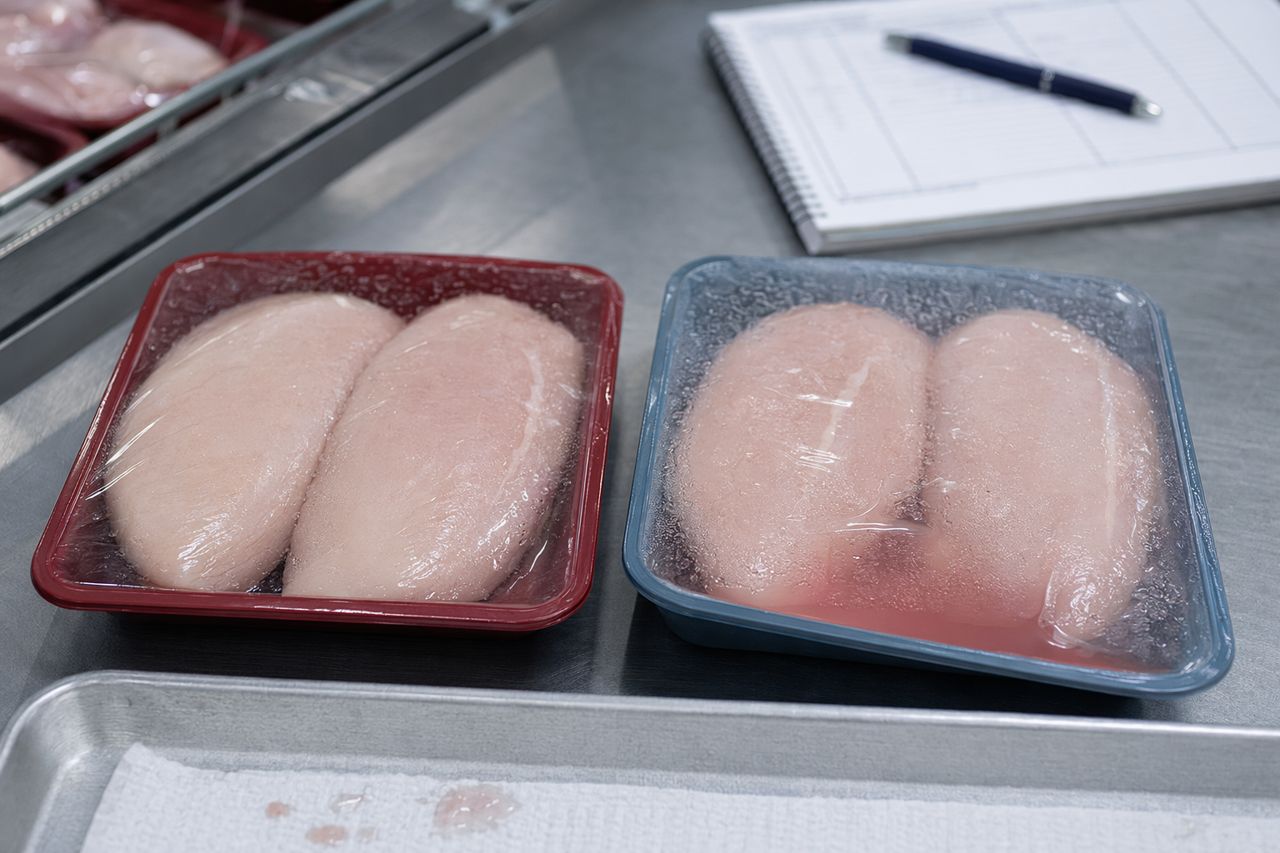
Retail purge is frustrating because it often appears after the plant has already done its job: injected, tumbled, packed, cooled, palletized, and shipped. By the time free liquid is visible in the tray, the root cause may be several process steps upstream.
Common contributors include:
The pack does not care which department owns the variable. It only reflects the final water-binding balance.
Before changing a formulation, align the team on what problem is being solved. Purge can mean different things depending on who is measuring it.
Useful distinctions include:
A practical validation plan should connect purge to texture, cook yield, sensory acceptance, and appearance. Reducing free liquid is not a win if the product becomes rubbery, under-marinated, too soft, or less repeatable at line speed.
Not all poultry meat entering the further-processing line behaves the same. A purge-control project should begin by separating avoidable process variation from unavoidable biological variation.
Track raw material by supplier, lot, muscle size, trim condition, temperature, and time since debone where available. If high-purge packs cluster around specific lots or size bands, the formula may not be the first issue.
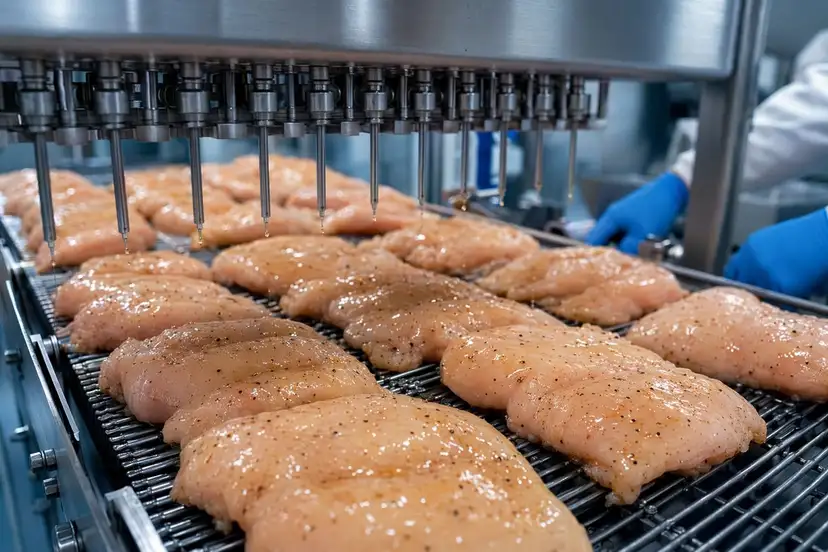
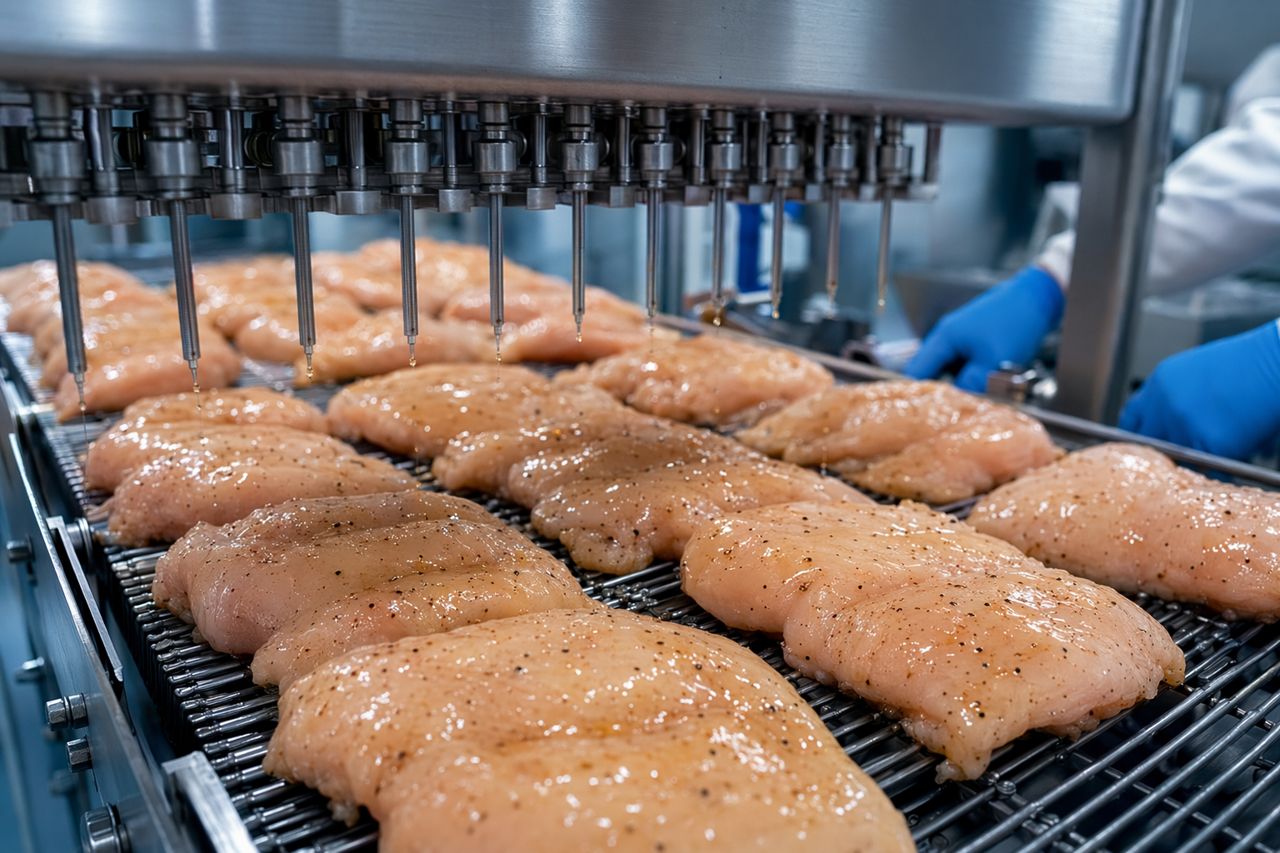
Average pickup can look acceptable while individual pieces are over- or under-injected. That spread matters. Over-injected areas can leak; under-injected areas can miss tenderness and flavor targets.
Review:
For retail packs, the goal is not maximum uptake. The goal is uptake that remains functional through tumbling, holding, packaging, and distribution.
A bench formulation can perform well under controlled conditions and still behave differently at production speed. Salt, phosphate where used, starch, fiber, protein systems, flavor components, and enzyme tenderizing steps all interact with time, temperature, and mechanical action.
Review the formula under the actual plant window:
Reformulation may still be needed, but it should be based on evidence from the process window rather than a single purge observation.
Tumbling should support distribution and protein functionality. It should not become uncontrolled mechanical damage.
Signs the tumble program needs review include excessive foam, surface tearing, uneven coating, rapid temperature rise, wet pack-out, or wide texture variation after cooking.
Useful variables to map include:
In high-throughput plants, small temperature and timing shifts can become meaningful across the production day.
If product moves directly from tumbling to sealed retail packs, the tray becomes part of the equilibration process. That can make purge more visible.
A controlled rest period can help the system stabilize before packing. The right rest window depends on the product, piece size, marinade, tenderizing approach, chill capacity, and throughput requirements. The purpose is not to slow the line unnecessarily. The purpose is to avoid shipping an unfinished water-binding event into the retail channel.
A pack that looks dry at seal can still show purge after distribution. Evaluate package performance under conditions that resemble the route to shelf.
Consider:
If purge increases sharply after simulated transport, the issue may be mechanical and thermal stress on a marginally stable product system.
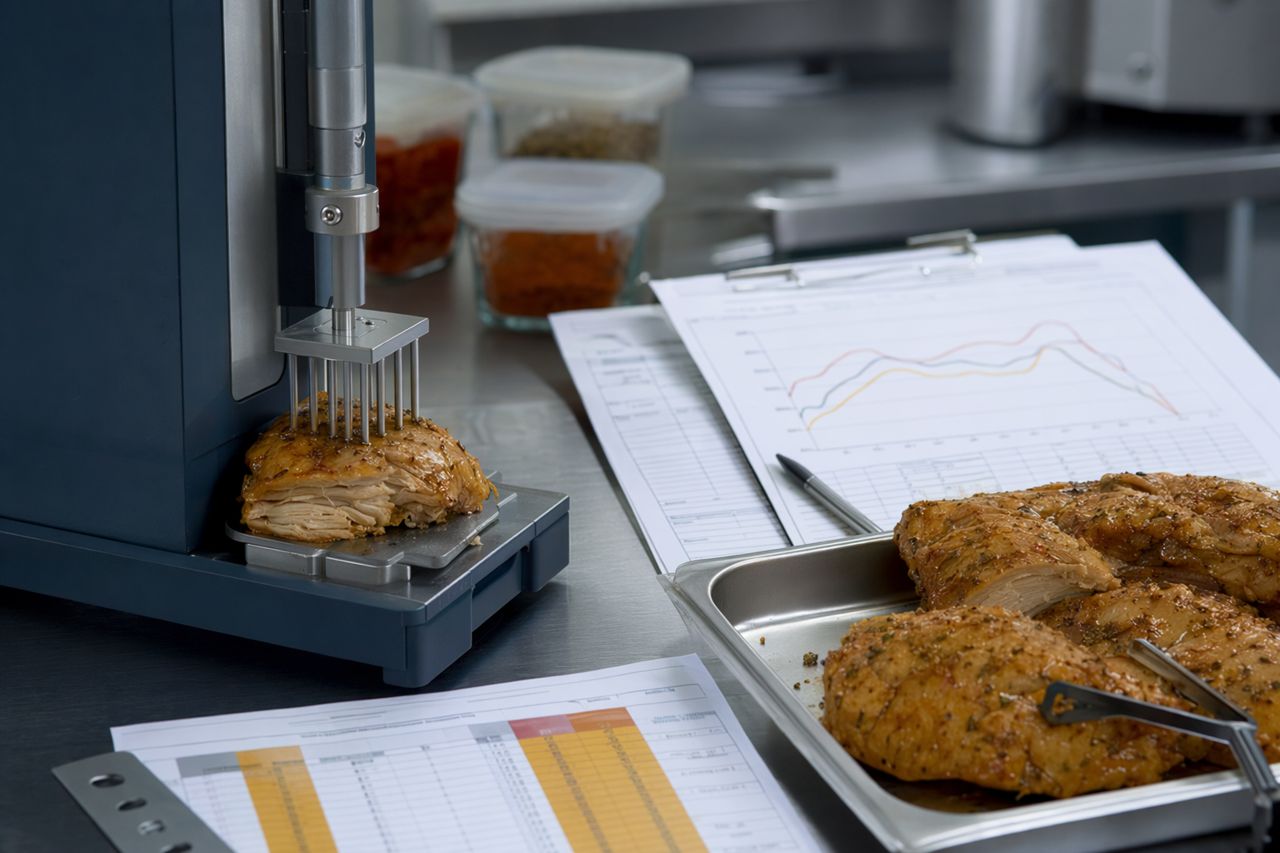
Enzyme tenderizing can help poultry processors reach a more consistent bite, especially when raw material variation makes tenderness targets difficult to hit. But enzyme use should be validated as part of the total process, not added as an isolated fix.
The key is control. Contact time, temperature, piece size, distribution, and downstream chilling all influence the result. A well-designed enzyme program should improve tenderness without creating over-soft texture, excessive drip, or batch-to-batch uncertainty.
FibreYield works with poultry further-processing teams to define practical use windows, run side-by-side plant trials, and connect texture outcomes with purge, cook yield, and label requirements.
A useful plant trial does not need to be complicated. It does need to be disciplined.
A typical structure can include:
This approach helps teams avoid chasing symptoms. It also gives purchasing, R&D, QA, and operations a shared basis for decisions.
Sometimes the process is already tight and the formula still needs work. In that case, reformulation is appropriate. But it should be targeted.
Potential formulation work may involve water-binding systems, salt balance, phosphate strategy where allowed, clean-label constraints, protein contribution, flavor system compatibility, or tenderizing technology. The important point is sequencing: understand the process first, then reformulate with fewer unknowns.
If your marinated poultry retail packs are showing purge, FibreYield can help structure a validation path around tenderness, yield, appearance, and process repeatability. We support application trials from bench screening through plant scale-up, with attention to label and operational constraints.
Request a quote to share your product format, current process, and target texture. We will help map the next practical trial step.
Tell us your application and volume — we reply with pricing and lead time.