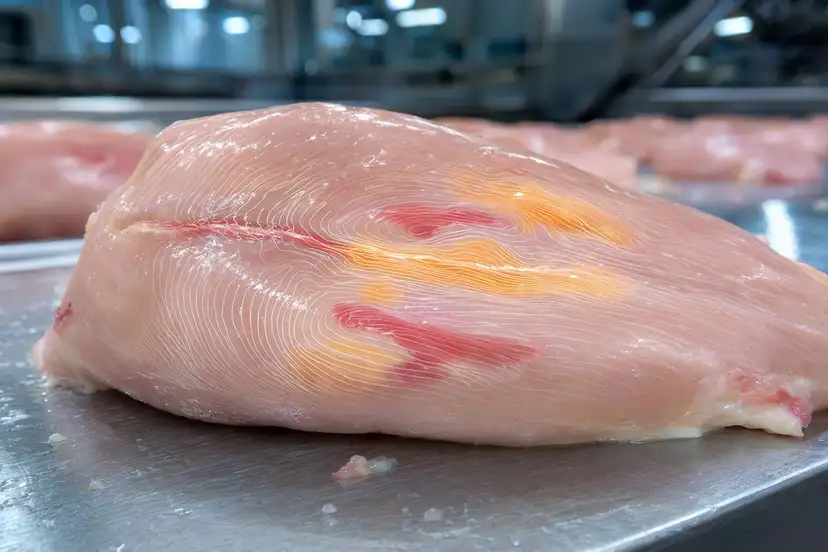
Marinade Pickup vs Retention in Poultry Yield Trials | FibreYield
Why poultry marinade pickup and retention should be measured separately, and how process teams can design cleaner tenderizing and yield validation trials.
Request pricing Why poultry marinade pickup and retention should be measured separately, and how process teams can design cleaner tenderizing and yield validation trials.
Request pricingFor a poultry further-processing plant, marinade pickup is not the same as retention. Mixing the two can make a tenderizing trial look successful at injection, then disappoint at tumbling, chilling, cooking, slicing, or pack-out.
That distinction matters when you are evaluating an enzyme supplier for poultry meat tenderizing, adjusting brine composition, or validating a new line condition. A high pickup number can hide weak bind, purge risk, texture drift, and inconsistent finished yield.
FibreYield works with R&D, QA, and plant process teams to separate the metrics, control the variables, and build a practical validation path from bench trial to production scale.
Pickup tells you what entered the meat. Retention tells you what stayed there.
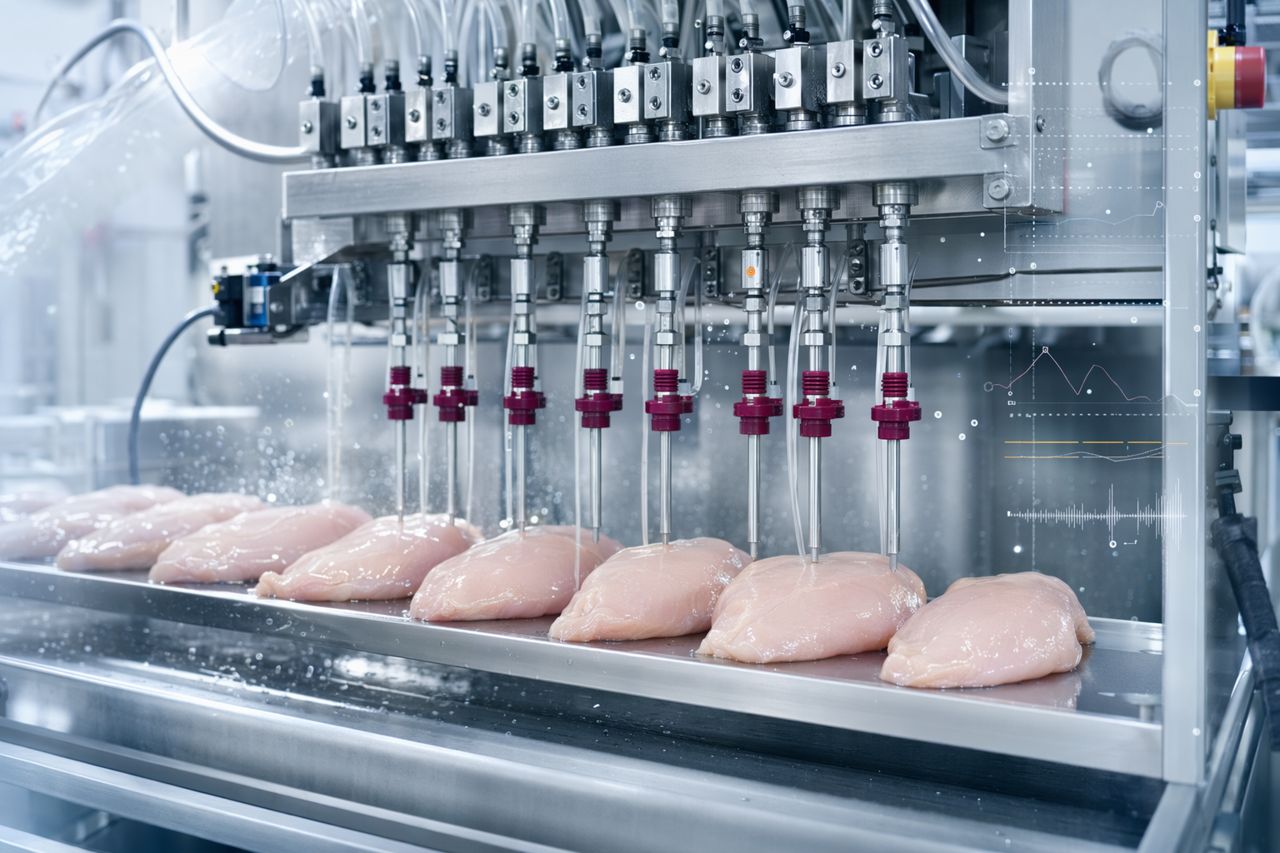
In poultry further processing, pickup is usually influenced by injection settings, needle pattern, brine temperature, raw material condition, vacuum, and dwell time. Retention is influenced by protein functionality, muscle structure, marinade chemistry, tumble profile, hold time, thermal process, and mechanical handling.
If the trial only reports one combined yield figure, the team may not know whether the problem is delivery, binding, tenderness development, or downstream process stress.
A plant can achieve an attractive post-injection weight gain and still see poor finished results. Common causes include:
Pickup is a process delivery metric. Retention is a finished-product performance metric. Both are needed.
Before choosing enzyme dosage strategy, brine system, or tumble program, define what the finished product must deliver:
Tenderness should not be treated as a vague improvement. It should be tied to a practical texture target the plant can reproduce.
Measure weight changes at meaningful checkpoints rather than relying on one final number. For example:
This makes it easier to see where yield is gained, lost, or only temporarily carried.
When too many variables move at once, the team cannot identify the cause of improvement or failure. During enzyme validation, hold the base marinade system as constant as possible unless the test objective is specifically to reformulate.
That means controlling salt level, phosphate or phosphate-free system, starch or fiber components, flavor load, injection pressure, tumble time, vacuum level, temperature, hold time, and thermal process.
A tenderizing trial should not chase softness at the expense of usable structure. Poultry processors need tenderness that survives scale-up, not a bench result that collapses on the line.
Useful observations include:
Enzyme systems for poultry meat tenderizing can support a controlled change in muscle texture when they are matched to the raw material, marinade system, temperature profile, and process time. The commercial value is not simply making meat softer. The value is delivering repeatable tenderness while protecting yield, appearance, and handling performance.
For high-throughput poultry further-processing plants, the best enzyme program is the one that fits the existing line with minimal disruption and clear validation data.
FibreYield focuses on application support around:
If a test group shows higher pickup, it is tempting to assume the solution is working. But pickup can increase because of delivery conditions, brine viscosity, raw material state, or temporary surface moisture. That does not guarantee finished retention.
The more useful question is:
At the final commercial checkpoint, did the product hold the target yield and texture without creating downstream defects?
That is the difference between a promising lab result and a production-ready tenderizing process.
Poultry raw material shifts quickly. One day of plant data is rarely enough to lock a formulation. A better approach is to run a structured trial across representative raw material bands and normal production conditions.
That includes evaluating:
The goal is not to create perfect test conditions. The goal is to prove the process under the conditions the plant actually runs.
A typical project begins with the finished product requirement, not with a generic ingredient recommendation. From there, FibreYield helps define the trial framework:
This keeps the trial grounded in plant realities instead of isolated lab performance.
If pickup and retention are mixed together, the trial can answer the wrong question. Pickup confirms marinade delivery. Retention confirms process value.
For poultry tenderizing projects, separate the two, track texture alongside yield, and validate under real production conditions. That is how R&D and process teams reduce trial noise and move faster toward a repeatable commercial result.
Planning a poultry tenderizing or yield validation trial? FibreYield can help match the enzyme approach to your product, line, and tenderness target.
Tell us your application and volume — we reply with pricing and lead time.